
"brain efficiency"
400 article(s) found

The study found that drinking coffee before exercise can reduce the bitterness of fitness.
Have you ever given up halfway because of hard work after making a fitness plan? If so, there may be hope that you can persevere by drinking some coffee before you exercise. American researchers have found that drinking coffee before exercise can effectively reduce the pain caused by exercise, which works for people with or without coffee drinking habits. Robert Motel, a professor at the University of Illinois in the United States, has been studying for seven years.
Coffee shop operation sharing international chain coffee shop diffuse coffee
Coffee shop: Overall, coffee shop is not a very good business, facing a series of problems such as high initial investment, high fixed cost, poor capital turnover efficiency, low growth rate, easy to reach the upper limit of income, fierce competition, etc. But in Zhongguancun, a place with a large population density, a large floating population and a large gathering of white-collar students, it can be said that it is second only to hotels in terms of just demand and inevitably leads to countless

Drinking coffee before exercise can effectively reduce pain
Robert Motel, a professor at the University of Illinois, has been studying the relationship between caffeine and exercise for seven years. He found that caffeine affects the parts of the brain and spinal cord responsible for dealing with pain, so he speculates that it can reduce pain caused by exercise. To prove this theory, Myrtle and the researchers organized experiments. They divided 25 healthy men in their 20s into two groups.

How does the aroma of coffee beans come from? what kind of substances does the aroma of coffee come from?
Professional coffee knowledge exchange more coffee bean information please follow the coffee workshop (Wechat official account cafe_style) Front Street-Coffee bean flavor substances non-volatile substances in coffee include: alkaloids (caffeine and trigonelline), chlorogenic acid, carboxylic acid, carbohydrates and polysaccharides, lipids, proteins, melanoids and minerals. Caffeine: it is soluble in water and will shadow.
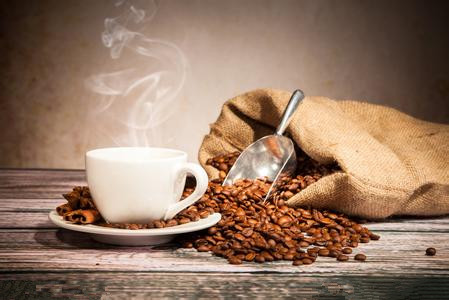
15 Health-preserving functions of Coffee from the Angle of traditional Chinese Medicine
Coffee is an imported product, when Western culture collides with traditional Chinese medicine culture, let's see how traditional Chinese medicine feels the pulse of coffee! The coffee bean is taken from the fruit of the coffee tree. It is red and red in color, enters the heart, is bitter, and merges into the path of the large intestine. The taste is bitter and bitter, fried and scorched. Glycol has the effect of nourishing and relieving pain, relieving pain, diverging pungent flavor, passing through the brain-blood barrier and treating surface wind.

Slim Beauty Black Coffee Diet
Recently, too many MM have asked me whether coffee can lose weight, how coffee can lose weight, what coffee to lose weight and so on. For the first question, the answer is yes, and the best slimming coffee is black coffee! Black coffee is commonly known as the best healthy coffee. A cup of 100 grams of black coffee has only 2.55 kcal of calories. So drinking a cup of black coffee after a meal can effectively break down fat. In

Traditional Chinese medicine talks about coffee and sees how to feel the pulse of coffee.
Coffee is an imported product, when Western culture collides with traditional Chinese medicine culture, let's see how traditional Chinese medicine feels the pulse of coffee! The coffee bean is taken from the fruit of the coffee tree. It is red and red in color, enters the heart, is bitter, and merges into the path of the large intestine. The taste is bitter and bitter, fried and scorched. Glycol has the effect of nourishing and relieving pain, relieving pain, diverging pungent flavor, passing through the brain-blood barrier and treating surface wind and heat.

Drinking coffee is not only an elegant life, but also a healthy life
Coffee is an imported product, when Western culture collides with traditional Chinese medicine culture, let's see how traditional Chinese medicine feels the pulse of coffee! The coffee bean is taken from the fruit of the coffee tree. It is red and red in color, enters the heart, is bitter, and merges into the path of the large intestine. The taste is bitter and bitter, fried and scorched. Glycol has the effect of nourishing and relieving pain, relieving pain, diverging pungent flavor, passing through the brain-blood barrier and treating surface wind and heat.

Look at the health-preserving function of coffee from the point of view of traditional Chinese medicine
Coffee is an imported product, spread from abroad to China, traditional Chinese medicine is a Chinese tradition, when Western culture collides with Chinese culture, what kind of result can appear? Let's take a look at the editor to introduce to you what coffee looks like in the eyes of traditional Chinese medicine. Look at the health-preserving function of coffee from the point of view of traditional Chinese medicine: 1. Refreshing and refreshing caffeine has a spicy flavor, which is easy to pass through the brain-blood barrier.
The nutritional value of Fine Coffee
Do not underestimate a small cup of coffee, it can contain a variety of healthy ingredients! Modern medical research points out that coffee beans contain sugars, protein, fat, hydrochloric acid, potassium, crude fiber, water and other nutrients. In addition, coffee also contains caffeine, tannic acid, alkaloids and other beneficial ingredients. Is coffee good or bad for the human body?
The health benefits of drinking coffee
Coffee can be used to treat many diseases, such as kidney stones, gout, smallpox, measles and cough. The work of the botanist Alpinos is quoted in a document at the end of the 17th century. In his book "Medicine and plants" about Egypt, he wrote: it is a good medicine for menopause in women, and it is a specific medicine for patients with menopause and pain. Coffee has many effects on the human body.

Health Benefits of Coffee
Coffee was initially used only in religious ceremonies and by prescription. Since the medical community discovered its beauty, more and more physicians have prescribed it. Coffee can be used to treat many diseases, such as kidney stones, gout, smallpox, measles and cough. A late seventeenth century document quotes the work of the botanist Alpinos. In his book on Egypt, Medicine and Plants,
Matters needing attention for the elderly to drink coffee frequently
Coffee is loved by young people, and it is also a favorite drink for many old people. But with the aging of the mental, physical and digestive systems of the elderly, coupled with the caffeine in coffee, is it harmful to the health of the elderly? Coffee contains caffeine. Drinking coffee after eating can lift one's spirits, eliminate fatigue, improve brain activity, increase appetite and promote digestion.
The Health Benefits of Coffee
Coffee was initially used only in religious ceremonies and by prescription. Since the medical community discovered its beauty, more and more physicians have prescribed it. Coffee can be used to treat many diseases, such as kidney stones, gout, smallpox, measles and cough. A late seventeenth century document quotes the work of the botanist Alpinos. In his book on Egypt, Medicine and Plants,

Regular coffee consumption reduces risk of bowel cancer
1 What is caffeine? Caffeine, a xanthine alkaloid compound, is a central nervous stimulant that temporarily drives away drowsiness and restores energy. Coffee, tea, soft drinks and energy drinks containing caffeine are popular, so caffeine is also the most commonly used psychoactive drug in the world. 2. What drinks generally contain coffee

Traditional Chinese Medicine talks about Coffee: tradition feels the pulse of Fashion
Coffee beans come from the fruit of the coffee tree, red red is fire, into the heart, gas is bitter, into the large intestine path. The taste is bitter and bitter, fried and scorched. Glycol has nourishing and relieving effects, relieving pain, diverging pungent taste, passing through the brain-blood barrier, treating surface wind-heat, headache, bitterness, dryness and diarrhea, and treating fever or dampness. Then look at coffee 17 from the perspective of traditional Chinese medicine.
Coffee and Health Benefits of Drinking Coffee
Coffee was initially used only in religious ceremonies and by prescription. Since the medical community discovered its beauty, more and more physicians have prescribed it. Coffee can be used to treat many diseases, such as kidney stones, gout, smallpox, measles and cough. A late seventeenth century document quotes the work of the botanist Alpinos. In his book on Egypt, Medicine and Plants,

The nutritional value of Coffee basic knowledge of quality Coffee
Do not underestimate a small cup of coffee, it can contain a variety of healthy ingredients! Modern medical research points out that coffee beans contain sugars, protein, fat, hydrochloric acid, potassium, crude fiber, water and other nutrients. In addition, coffee also contains caffeine, tannic acid, alkaloids and other beneficial ingredients. Is coffee good or bad for the human body?
Coffee Health talk about the nutritional value of Coffee
Do not underestimate a small cup of coffee, it can contain a variety of healthy ingredients! Modern medical research points out that coffee beans contain sugars, protein, fat, hydrochloric acid, potassium, crude fiber, water and other nutrients. In addition, coffee also contains caffeine, tannic acid, alkaloids and other beneficial ingredients. Is coffee good or bad for the human body?
Traditional Chinese Medicine talks about Coffee tradition to feel the pulse of Fashion
The coffee bean is taken from the fruit of the coffee tree. It is red and red in color, enters the heart, is bitter, and merges into the path of the large intestine. The taste is bitter and bitter, fried and scorched. Glycol has nourishing and relieving effects, relieving pain, diverging pungent taste, passing through the brain-blood barrier, treating surface wind-heat, headache, bitterness, dryness and diarrhea, and treating fever or dampness. Then look at the 17 coffees from the perspective of traditional Chinese medicine.